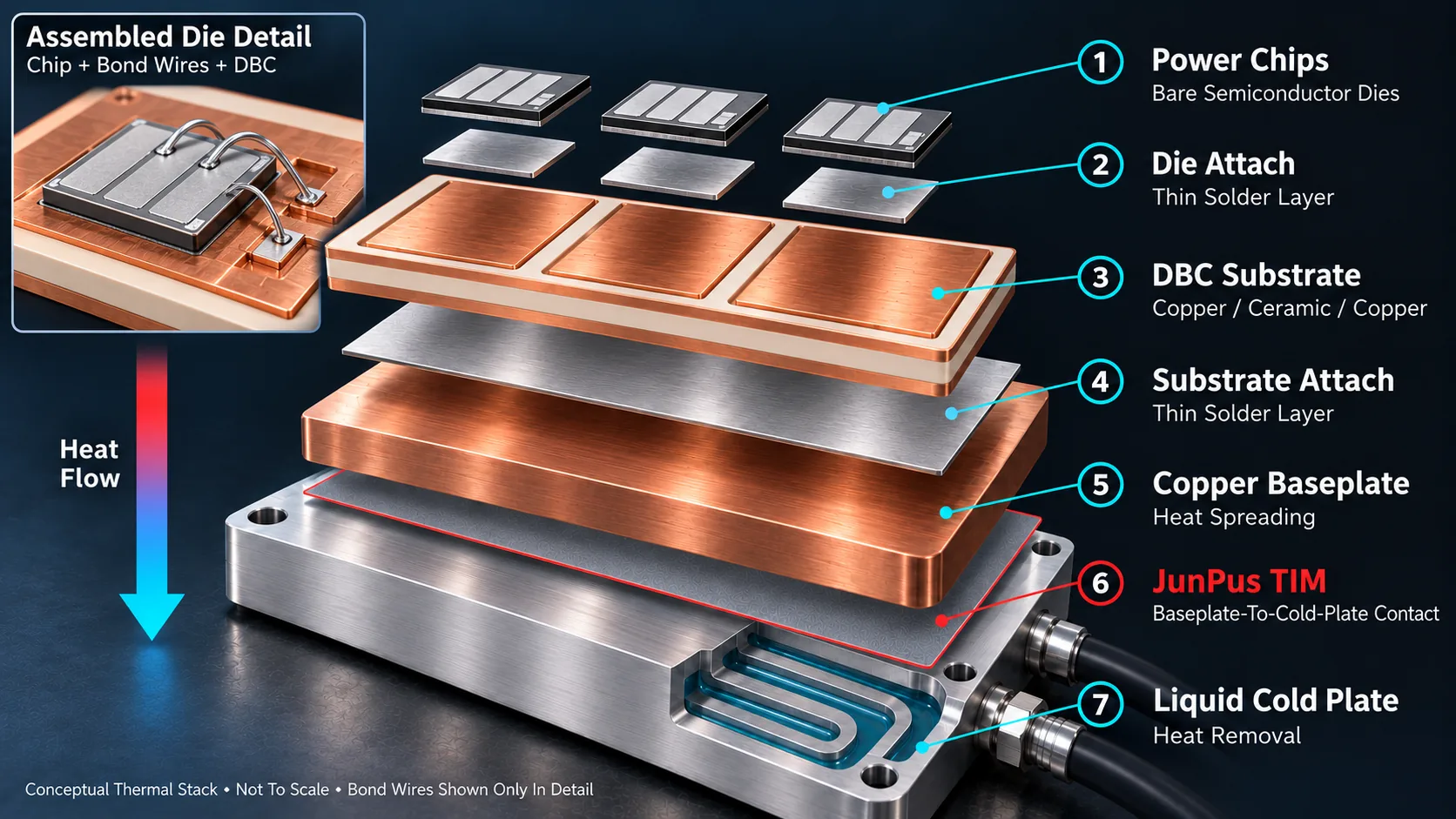
JunPus thermal compounds deliver advanced heat dissipation solutions tailored for high-performance AI chips, CPUs, GPUs, and 5G base stations.
Engineered for cutting-edge semiconductor technologies,
our patented thermal pastes optimize thermal conductivity, ensuring stable performance under intensive workloads. Trusted across electronics, data centers, and telecommunications
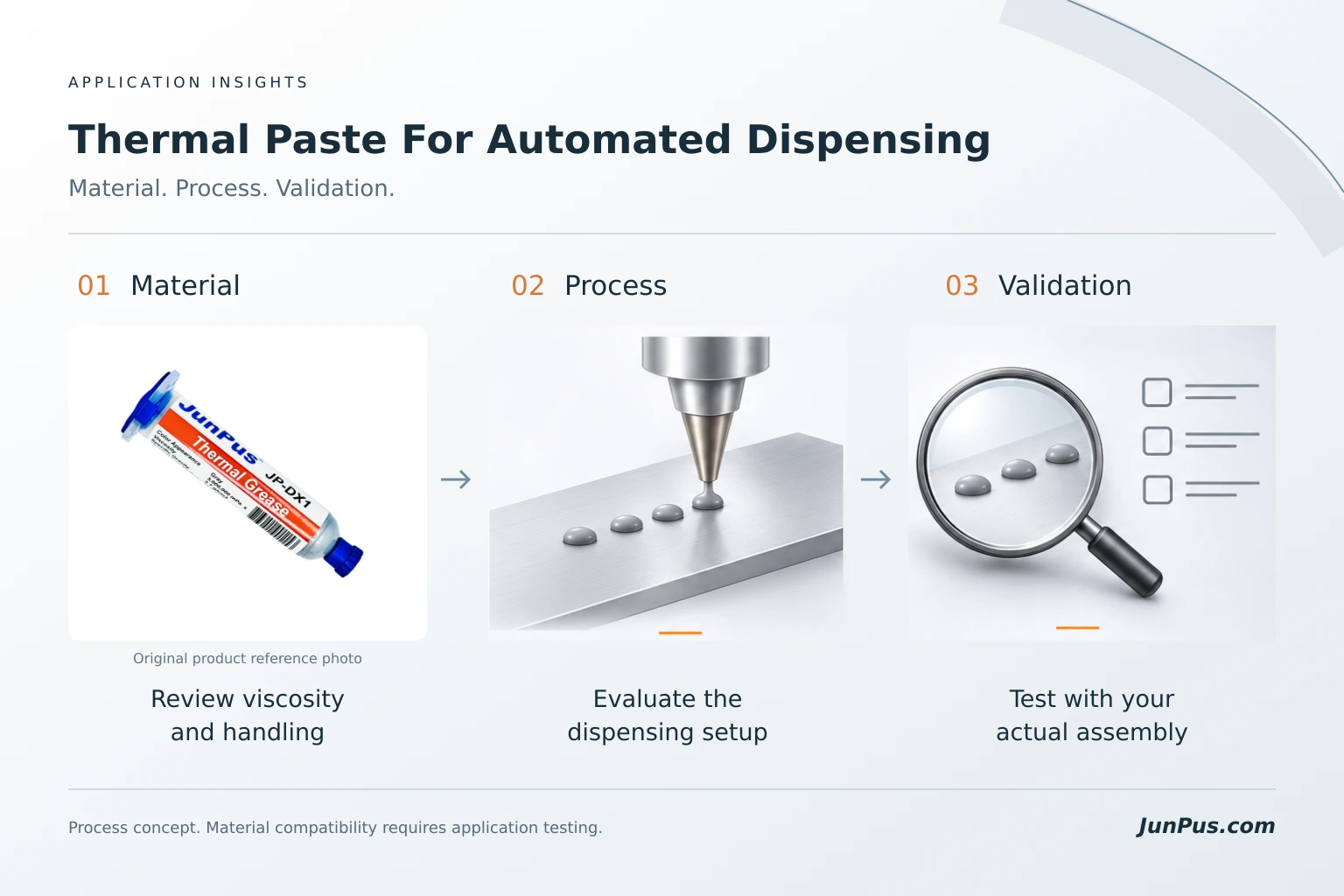
Moving from hand-applied thermal paste to an automated station starts with a practical question: Will the material work with the way you need to dispense and assemble it?
A product specification is a starting point. Your valve, feed system, nozzle and contact geometry determine what must be evaluated next. For teams planning cooling interfaces around CPUs, GPUs, FPGAs and ASICs, JunPus offers a material-focused starting point for that discussion, without treating every assembly as the same application.
Three Application Scenarios Worth Defining First
A Controlled Deposit on an Individual Chip
If your design calls for a single deposit before mounting a heatsink, define the target quantity, placement tolerance and final contact area. The smallest available nozzle is not automatically the right choice. The nozzle must suit both the deposit and the material passing through it.
A Line Across an Extended Contact Surface
For an assembly that calls for a line rather than a dot, evaluate dispensing behavior during movement, including the start and finish. The selected pattern should follow the thermal interface design, not simply the appearance of a demonstration video.
Multiple Devices Under a Shared Cooling Assembly
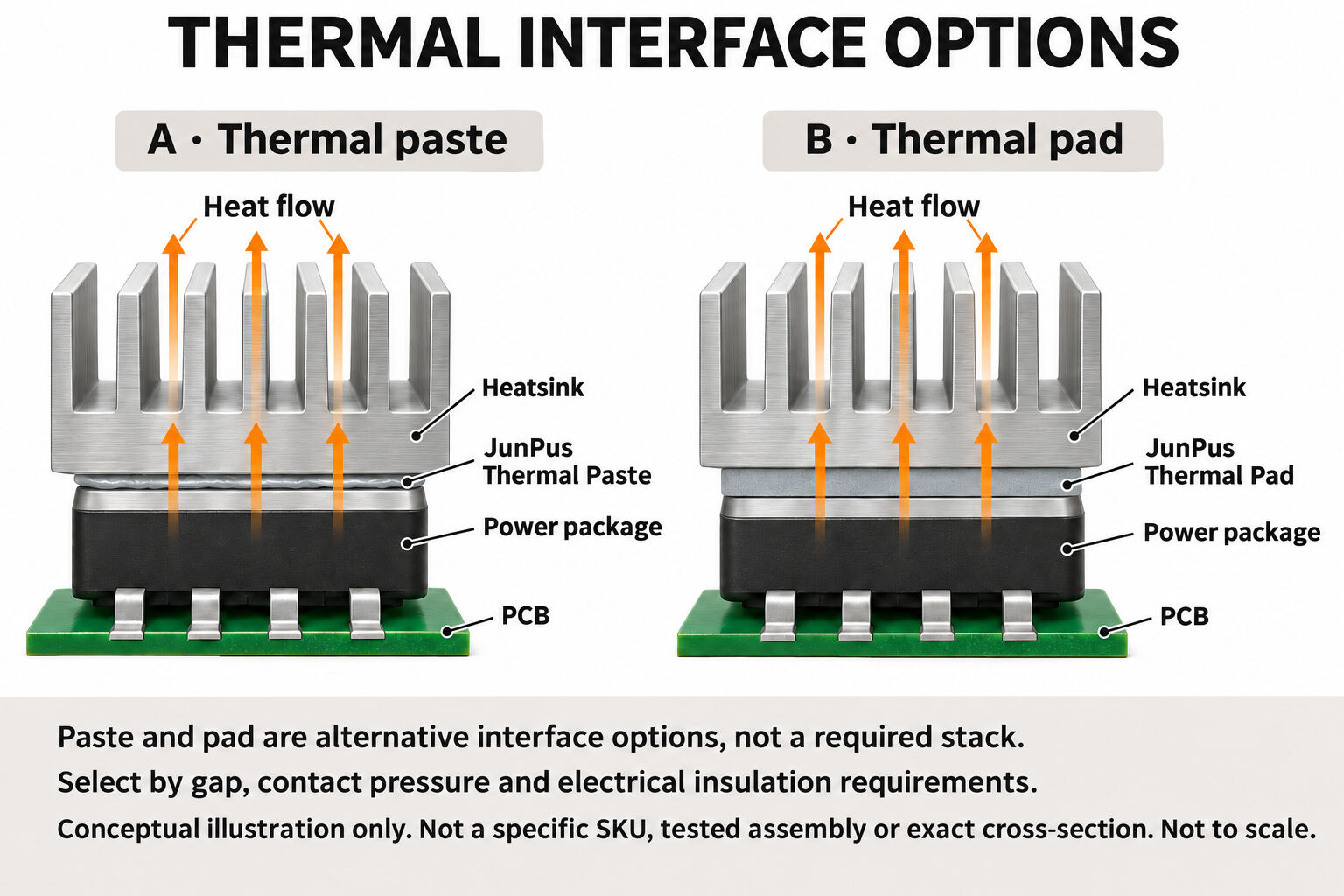
Where one assembly serves several devices, map each interface separately. Different contact areas and mechanical gaps may require different material solutions. Do not assume thermal paste should replace a specified gap-filling pad.
These are evaluation scenarios, not claims that a particular JunPus material or dispensing setup has been qualified for every device.
Why “Auger Valve” Is Not a Complete Specification
An auger valve meters material using a rotating screw. However, screw geometry, internal clearances and wetted-part construction differ between designs. Filled thermal materials also make particle information and wear considerations relevant to equipment selection.
Before choosing a head, confirm the exact metering principle. An auger valve and a progressive cavity dispenser are not interchangeable labels. Ask the equipment supplier to review the intended material, rather than relying on a generic “thermal paste compatible” description.
For your selection discussion, bring four details:
Material information: the current technical data, viscosity measurement conditions and available particle-size information. Average particle size should not be treated as maximum particle size.
Valve construction: the specific head, its clearances and the supplier’s assessment of material compatibility and wear.
Delivery path: the intended feed arrangement and nozzle geometry, including the restrictions between the reservoir and the part.
Application target: dot or line, deposited quantity, contact area and intended assembly conditions.
These details help turn a broad compatibility question into a useful trial brief. They do not replace testing with the actual material.
Compare their current product documentation against your interface requirements, then discuss a candidate for dispensing evaluation. Do not choose between them solely by a viscosity figure or assume that a higher number means a better process. This article does not designate either product as pre-approved for an auger valve.
Once the material and equipment candidates are defined, use our thermal paste dispensing evaluation guide to plan deposit measurements and assembled-interface checks.
Make Your Next Trial Specific
Bring your part, your process and your target to JunPus.
Share your candidate product, valve model, nozzle details, deposit pattern and thermal interface requirements. If you have already run a trial, include what happened at the nozzle and after assembly. A clear application brief makes the next material discussion more useful than a generic request for the “best thermal paste.”
Material suitability and equipment settings require application-specific validation. No dispensing pressure, production rate or performance improvement is established by this article.