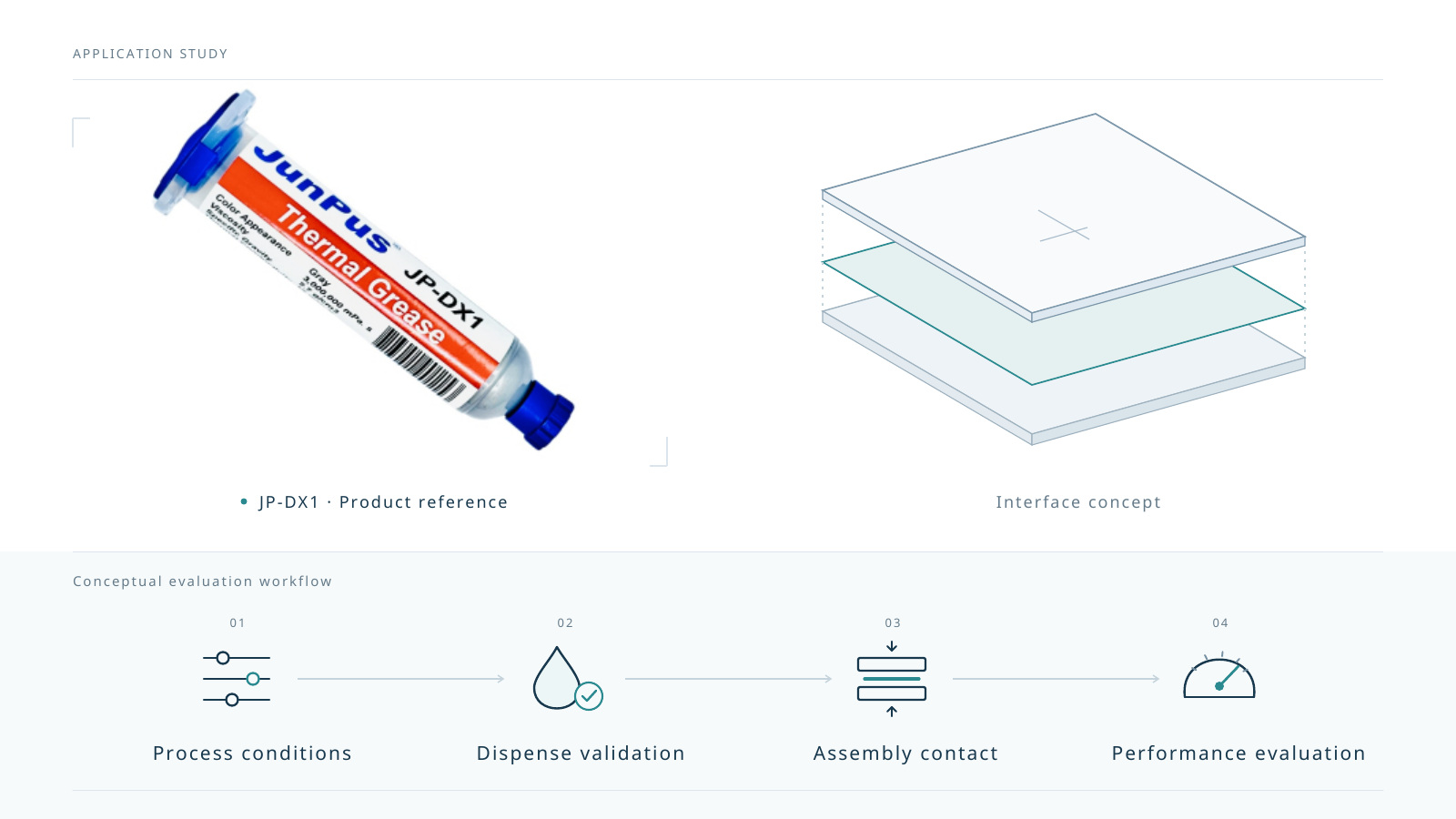
For teams developing AI servers and accelerator assemblies, a thermal paste evaluation reaches beyond the material data sheet. In automated dispensing, the paste must be deposited in a controlled way and form the intended thermal interface after assembly. A useful trial connects three records: the machine setup, the individual deposit and the assembled joint.
Start with the interface you need to build
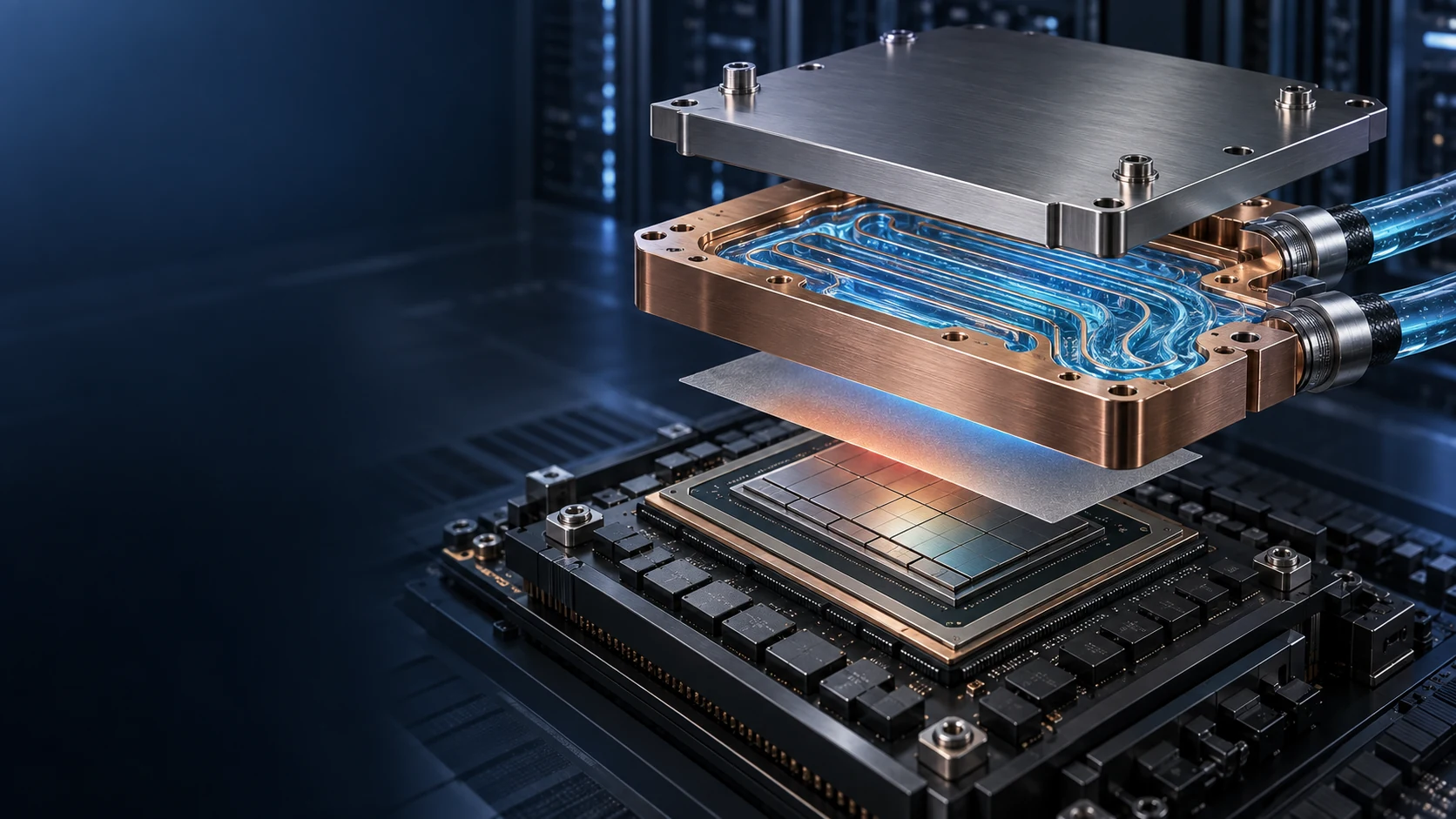
Before selecting a dispensing recipe, define the heat source, mating surface, contact area and target bond line thickness (BLT). Record the assembly pressure and dimensional tolerances that determine the final gap. These details give the material and equipment suppliers a common starting point.
Thermal conductivity is one material characteristic. The finished interface also depends on its thickness and contact conditions. Nordson EFD’s thermal compound guidance identifies BLT as a material-selection consideration [1]. For a proposed AI hardware assembly, request thermal data with its test method and conditions, then plan a separate evaluation of the actual joint.
Make the machine trial specific
Describe the equipment model, dispensing principle, feed system and package format. Record nozzle inner diameter, length and tip geometry, together with the intended pattern and working distance. Discuss filler characteristics and material–equipment interaction with both suppliers; a matching package connection alone does not establish process suitability [2].
Include material temperature, ambient temperature and conditioning time in the trial record. Follow the selected grade’s handling instructions rather than assuming that heating, mixing or a different nozzle will solve a dispensing issue. Establish the starting settings with the equipment supplier and document each change so that the next run can be compared meaningfully.
Evaluate the deposit across the production cycle
Define the target mass or volume per shot, placement requirement and permitted variation before the trial. Include the intended cycle time, normal pauses, startup and restart sequence. A short run of visually similar dots leaves important questions about the wider production cycle unanswered.
Where weighing is suitable, record the net mass of each deposit in dispense order. Check that the balance and collection method can resolve the variation of interest. Report the number of deposits, mean, spread and range, and compare the mean with the target separately. A tightly grouped series can still be off target.
Keep startup and restart results identifiable. A plot of mass against dispense number can reveal shifts and unusual observations, as described in NIST’s run-sequence guidance [3]. Treat it as a diagnostic view, not automatic proof of process capability. Preserve the raw results and note changes in settings or conditions.
Validate the assembled interface
Inspect the deposited pattern for placement, stringing and interruptions, then assess coverage and excess material after assembly using an agreed method. Confirm the resulting BLT and test thermal performance under representative assembly and operating conditions. Define any required durability evaluation before qualification.
Deposit repeatability, coverage and assembled thermal performance answer different questions. Keep their acceptance criteria separate, then review them together. A trial record should connect the material grade and batch with the equipment configuration, settings, inspection methods and results. Agree which changes require another evaluation.
Start a focused sample discussion with JunPus
Send JunPus your application and six process details: equipment, nozzle geometry, material temperature, deposit requirement, target BLT and cycle time. Include your planned acceptance criteria and any available trial record.
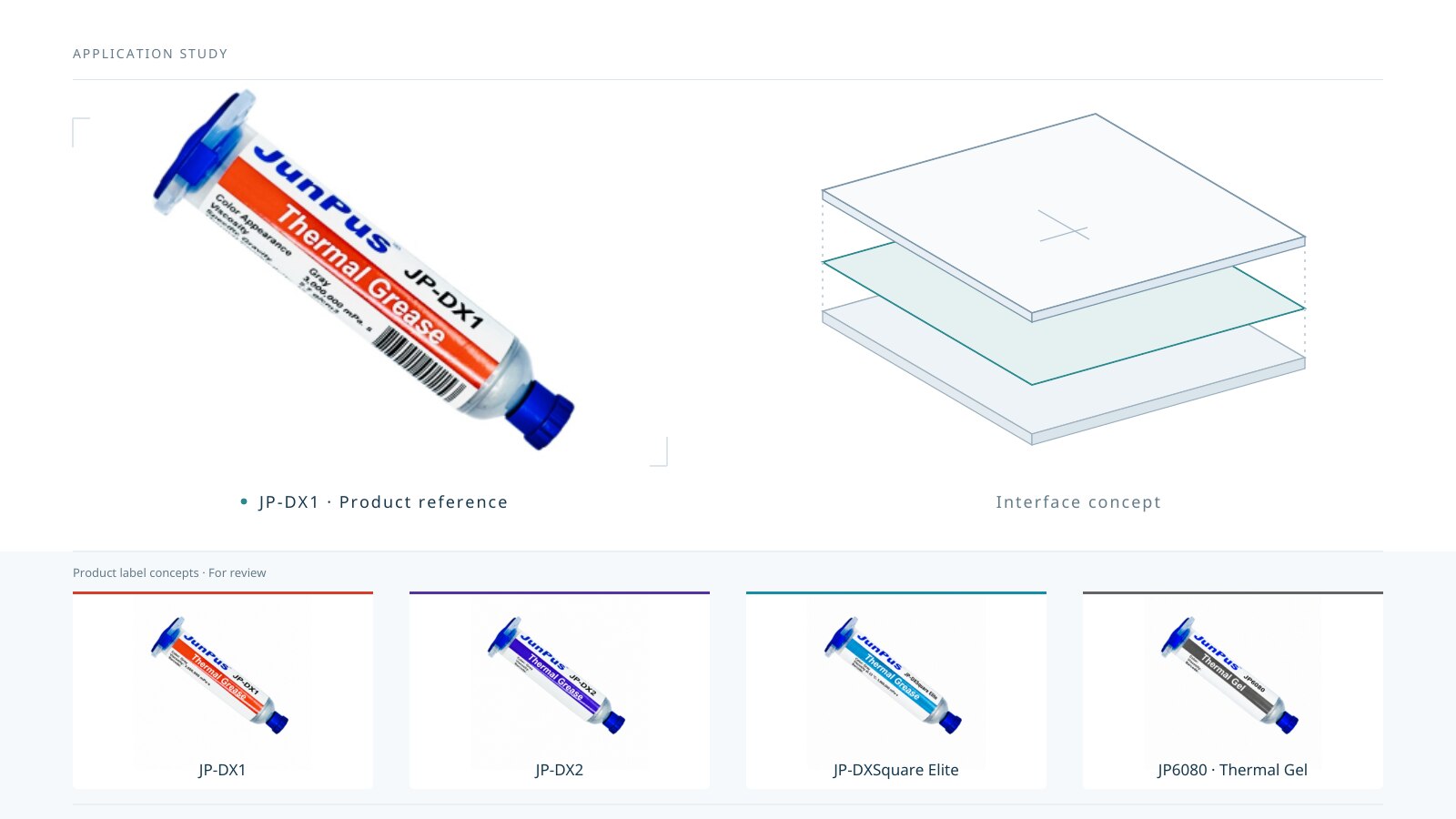
If JP-DX1 is under consideration, request current approved technical information, handling instructions and a suitable sample format for review. Contact This email address is being protected from spambots. You need JavaScript enabled to view it. or use the JunPus contact page to discuss the next evaluation step. Material suitability and sample availability remain subject to application review and validation.
Technical references
- Nordson EFD: Thermal Interface Materials (BLT and material selection)
- Parker Chomerics: Thermal Interface Material Dispensing Guide (equipment and process considerations)
- NIST: Run-Sequence Plot (sequential observations)
References support general engineering principles; they do not certify a JunPus grade or establish equipment compatibility.