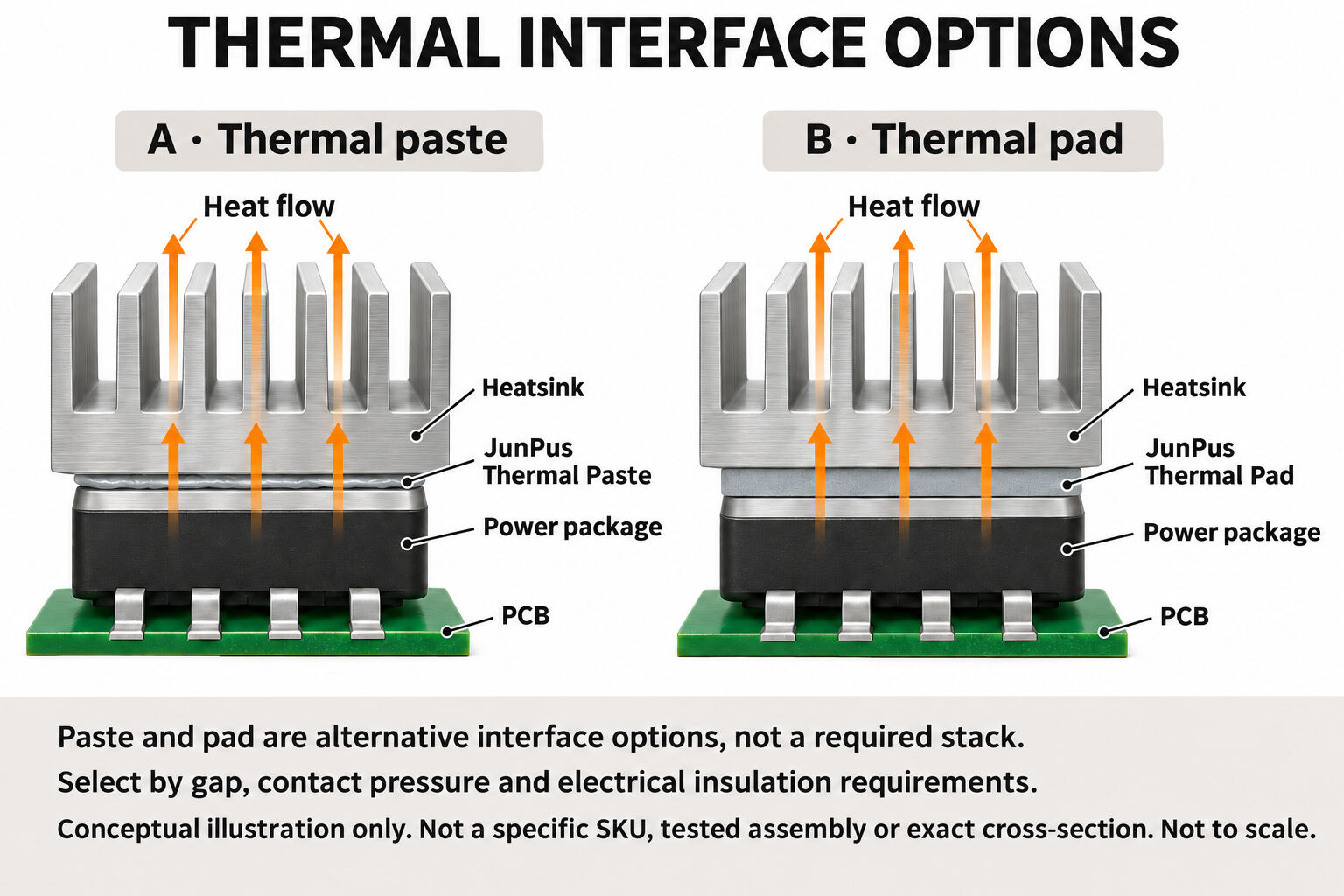
JunPus thermal compounds deliver advanced heat dissipation solutions tailored for high-performance AI chips, CPUs, GPUs, and 5G base stations.
Engineered for cutting-edge semiconductor technologies,
our patented thermal pastes optimize thermal conductivity, ensuring stable performance under intensive workloads. Trusted across electronics, data centers, and telecommunications
Six Processor Roles in AI Infrastructure: A Guide to Thermal Interface Materials
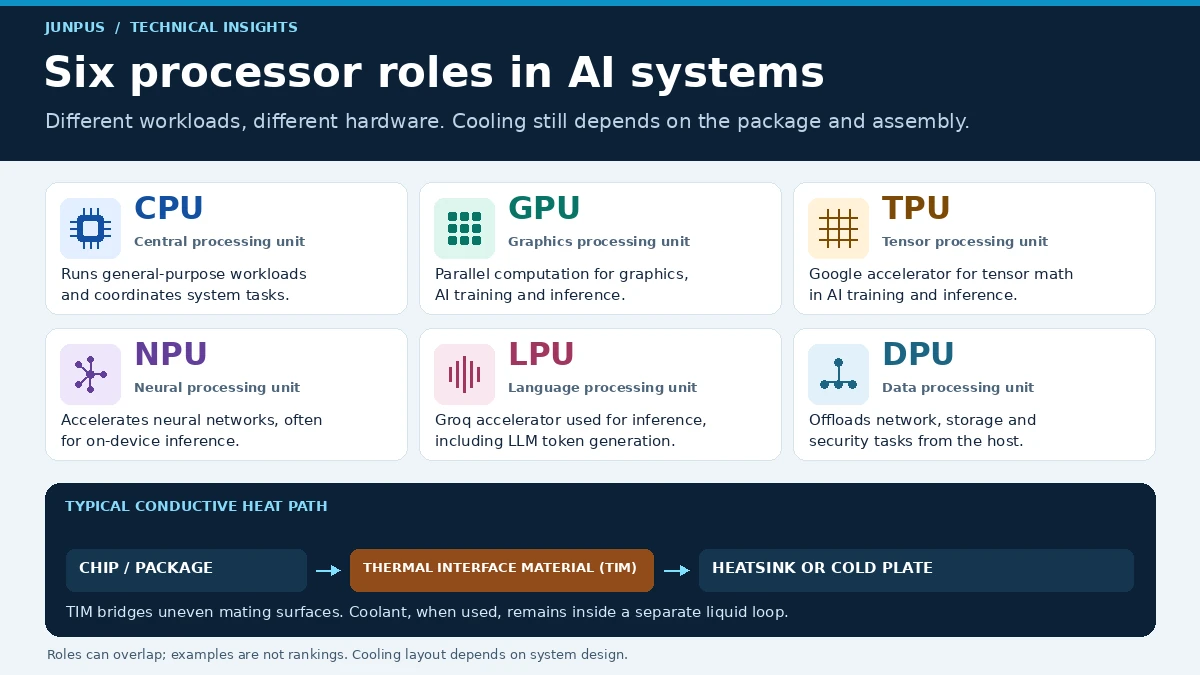
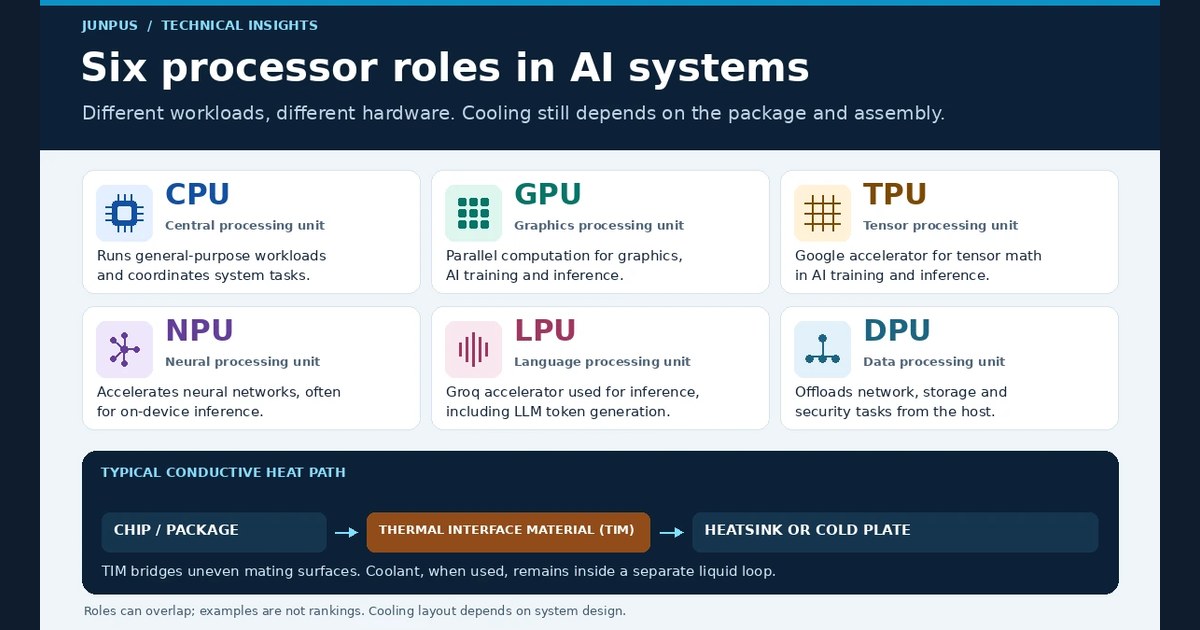
An AI request may start on a host CPU, run on a GPU or a specialized accelerator, and return through a system that also handles network traffic and storage. Some models can instead run on a phone, PC, or edge device using an on-device NPU. These are six useful roles to understand, not six mutually exclusive categories or a parts list for every AI system.
Figure: Six representative processor roles and the thermal path through TIM. Schematic only; not a package drawing or performance ranking.
Six roles, six different design trade-offs
01 | CPU: System coordination and general-purpose compute
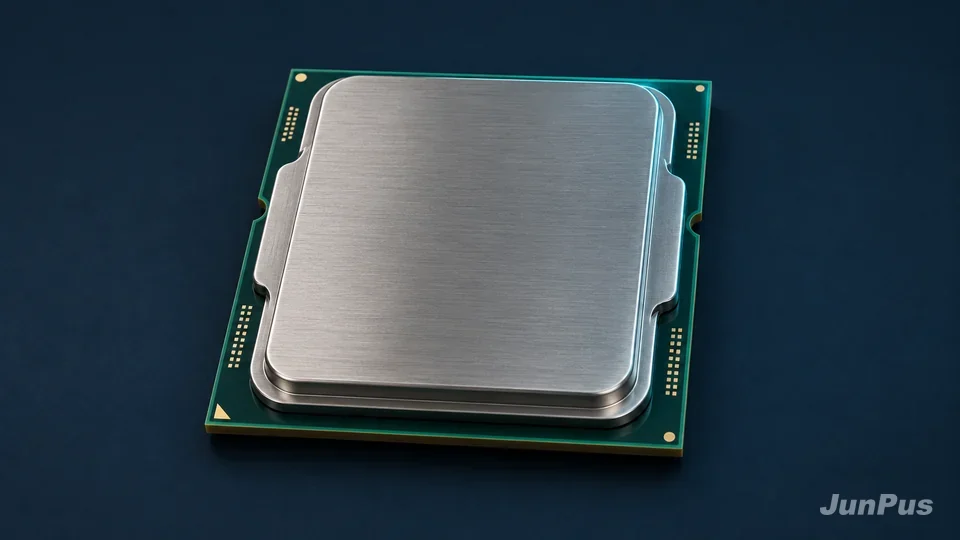
A lidded CPU package. It runs general-purpose workloads and coordinates the system.
The CPU typically runs the operating system, prepares data and dispatches accelerator work when needed. It can also run inference directly, particularly for some small or latency-sensitive workloads. Its flexibility is valuable, while specialized accelerators may be better suited to large, regular matrix workloads. For thermal design, start with the package, heatsink base, retention hardware and specified mounting load. Intel: Deploying AI applications on AI PCs
02 | GPU: Parallel training and inference
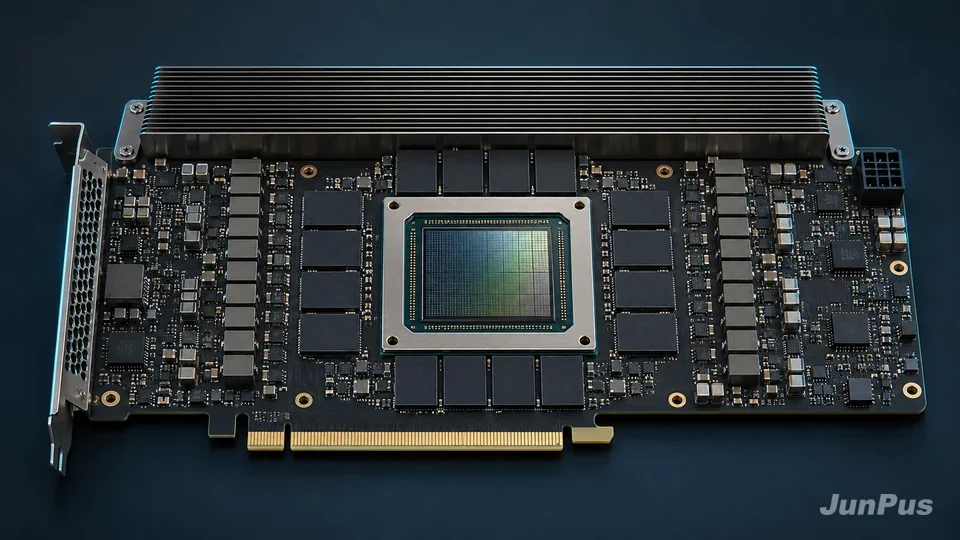
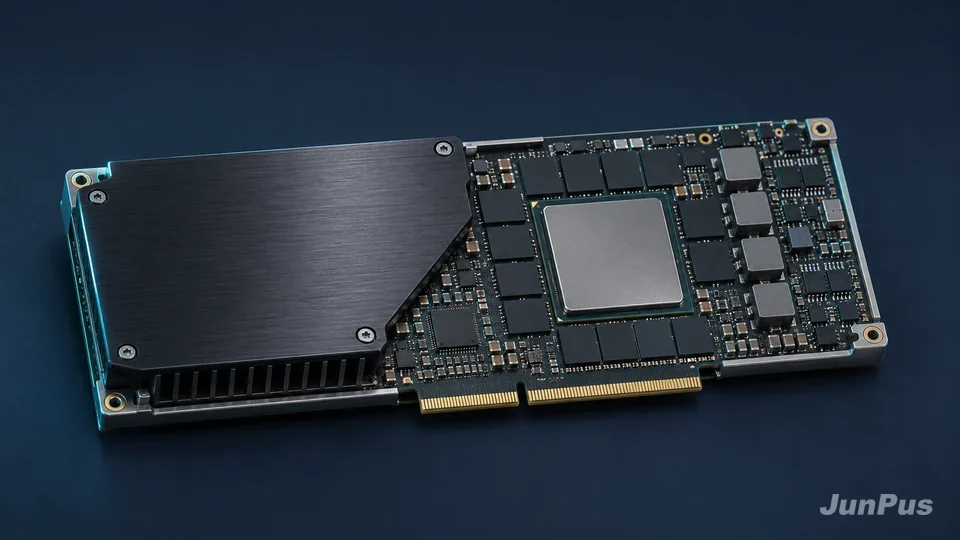
A data-center GPU accelerator card. It runs many calculations in parallel for training or inference.
GPUs perform many calculations in parallel, including matrix operations. Training includes forward computation, backpropagation and weight updates; inference generally uses trained weights without updating them. HBM is used on some data-center GPU models, and CUDA is NVIDIA's platform. Evaluate memory requirements, power and cost for the actual workload. On a board, distinguish the primary GPU interface from other component contacts and retain any OEM-specified pads. NVIDIA: H100 data-center GPU
03 | TPU: Dedicated tensor processing
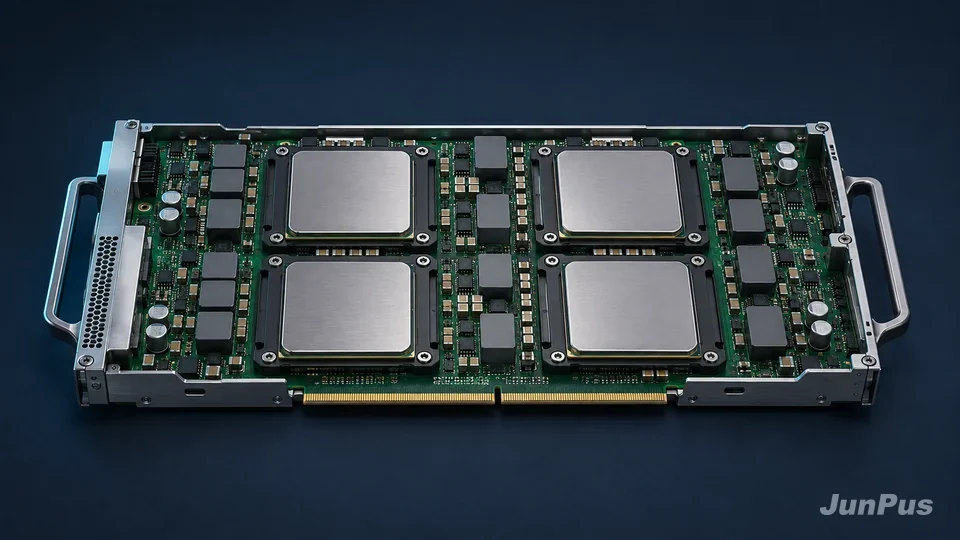
A tensor accelerator module. This type of hardware is designed for large matrix workloads.
Google TPUs use matrix multiplication units built around systolic arrays. Suitable workloads can scale across chips, and Cloud TPUs support both training and inference. TensorFlow, JAX and PyTorch workflows are available; check the intended TPU generation and operator support. For a particular module, follow the supplier's package and cooling assembly requirements. Google Cloud: TPU system architecture
04 | NPU: On-device AI inference
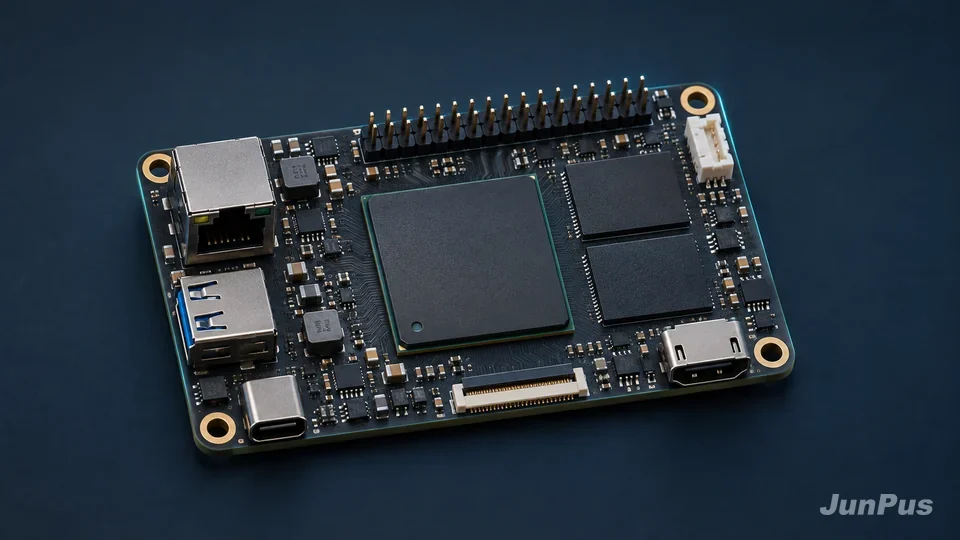
An edge device’s main SoC package. The NPU can be inside that package rather than on a separate chip with its own thermal interface.
An NPU can accelerate compatible models locally on phones, PCs and edge devices. The application prepares input, the runtime dispatches supported operations and results return to the application. Supported precision, latency and whether data stays on device depend on the hardware, model and application. Where the NPU shares an SoC, assess the package-to-spreader or enclosure interface rather than assuming a separate NPU contact. Intel: On-device AI deployment
05 | LPU: An architecture for low-latency language-model inference
Rack-mounted language-model inference hardware. Its role is to serve model requests with low latency.
LPU here refers to Groq's Language Processing Unit. The architecture uses on-chip SRAM and compiler scheduling; larger models can be mapped across chips. Deterministic execution refers to the scheduling approach, not identical model responses or guaranteed end-to-end latency. Qualify thermal materials against the accelerator card or server design. Groq: The LPU explained
06 | DPU: Network, storage and security offload
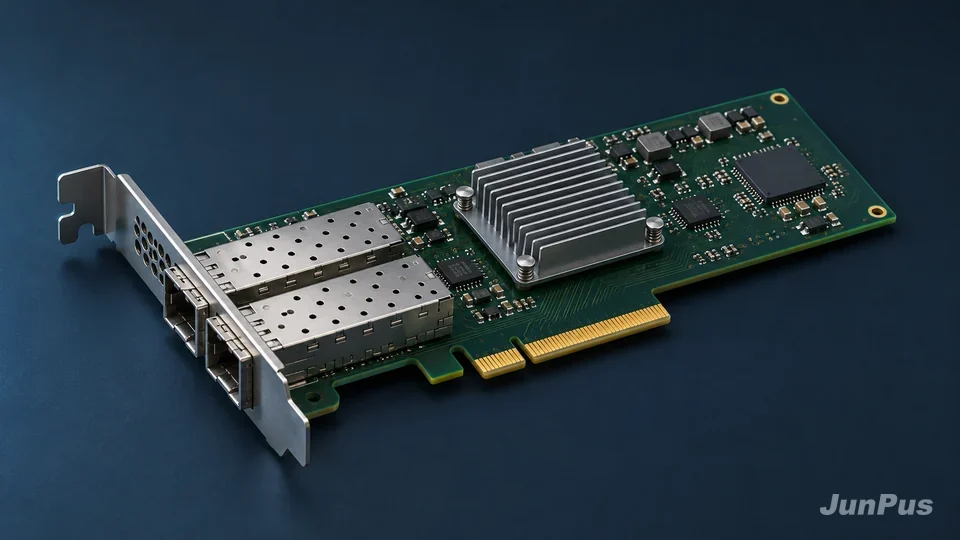
An infrastructure accelerator card with network ports. It offloads networking, storage and security work.
Depending on the platform and configuration, a DPU can accelerate or isolate tasks such as packet processing, storage traffic and security, relieving the host CPU. It is not a model-training engine, and not every SmartNIC is a DPU. Assess the board's heatsink, chassis airflow and component heights according to the vendor design. NVIDIA: BlueField DPU
JunPus material selection: Start with the actual interface
Assembly interface
JunPus evaluation starting point
Verify before use
Thin package-to-heatsink or package-to-cold-plate contact on a CPU, GPU or specialized accelerator
The system supplier's fluid specification and wetted-material compatibility. Coolant is separate from the solid-contact TIM.
These are evaluation starting points, not OEM approvals or platform compatibility claims. Compare thermal resistance under matched temperature, mounting pressure and bond-line thickness rather than relying on the material's conductivity rating alone. Validate the selected interface in the actual assembly and under representative cycling. Open Compute Project: Cold Plate Development and Qualification